Huedle: the daily color gradient puzzle
Swap the scrambled tiles until every color flows into the next. One shared Huedle board a day, a par score to beat, and a gentle Monday-to-Sunday difficulty climb.
What is Huedle?
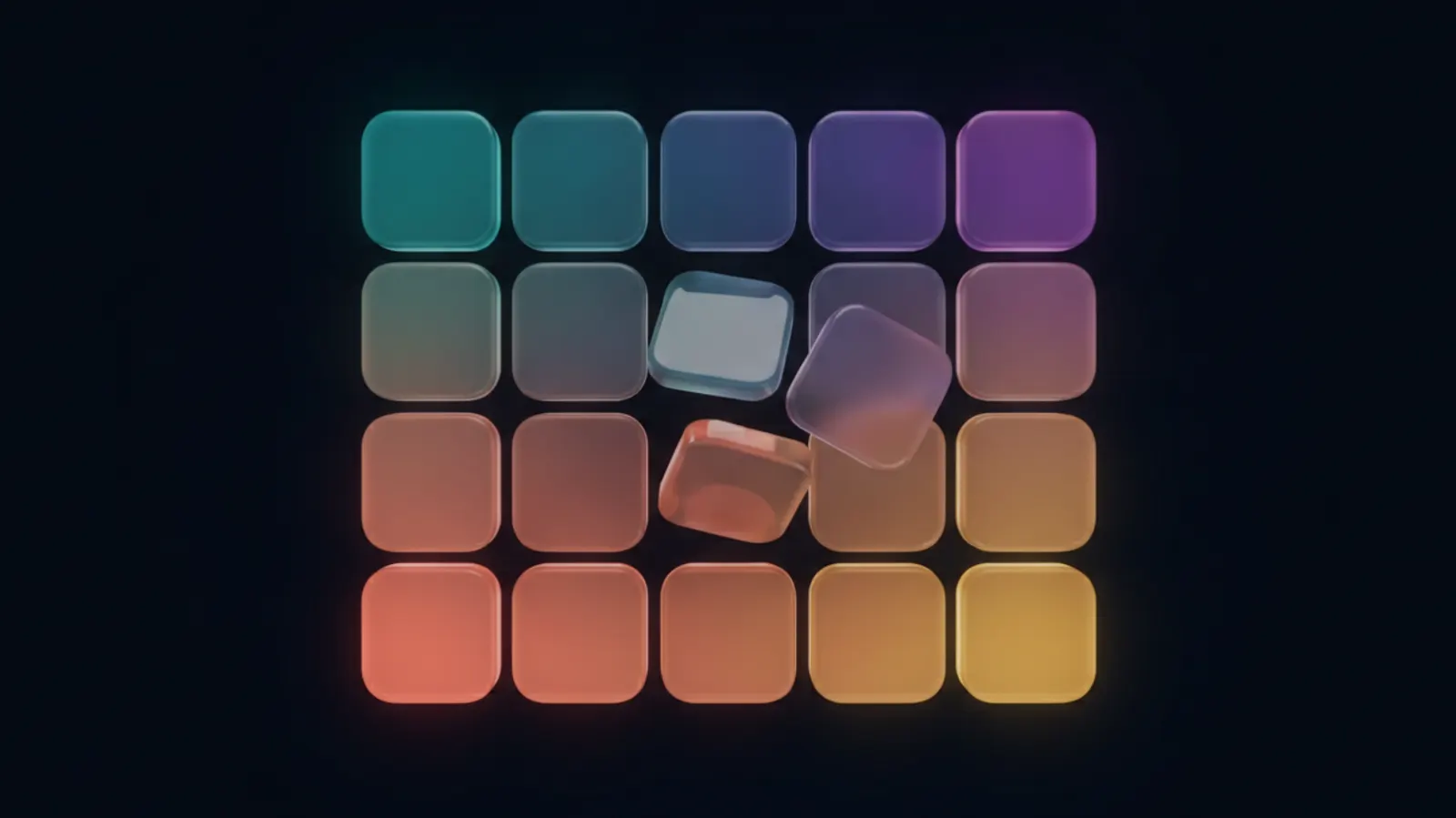
Huedle is a daily color puzzle in the spirit of Wordle: one board a day, the same for everyone, quick to start and satisfying to finish. Instead of letters, you work with color. A smooth two-dimensional gradient is cut into a grid of square tiles and shuffled, and your job is to put every tile back where it belongs.
The corners of every Huedle board are locked in place, so you always know the four colors the gradient blends between. Everything else has to be read by eye: is this teal a little greener than that one, a little darker, a little closer to the violet corner? It is a calm puzzle that quietly trains your color perception.
On Huedle Game every Huedle board is generated in the OKLab color space, which spaces colors the way human eyes see them, and each board is checked so that no two tiles are too similar to tell apart. That means a hard board is hard because the steps are subtle, not because two tiles are secretly identical.
How to play Huedle
A full game of Huedle takes two to ten minutes. These four steps are all you need.
- Read the anchorsTiles with a ringed dot are locked. They show the true colors of the corners, and on easier days the middle of each edge.
- Swap tilesDrag one tile onto another to swap them, or tap two tiles in turn. On a keyboard, use the arrow keys and press Enter.
- Watch for the checkA tile that lands in its home cell gets a small white mark and a soft chime, and the progress bar fills.
- Finish near parWhen the last tile clicks into place the Huedle gradient seals up. Your swaps are compared with par, the fewest swaps possible.
Scoring: swaps, par and a Perfect solve
There is no way to lose a Huedle board, so the real Huedle challenge is efficiency. Every swap you make is counted, and when you finish your total is compared with par.
Huedle par is not a guess or an average: it is the mathematically fewest swaps that can solve that exact scramble. A scrambled board breaks down into cycles. If tile A sits in B’s place, B sits in C’s place and C sits in A’s place, those three tiles form a cycle, and a cycle of three tiles always needs exactly two swaps. Add up every cycle on the board and you get par: movable tiles minus cycles.
| Rating | What it takes |
|---|---|
| Perfect | Solved in exactly par swaps, with no hints. Every swap put at least one tile home. |
| Brilliant | Within 10% of par. |
| Great | Within 30% of par. |
| Solved | Any finished board. Every tile is home. |
| Assisted | A hint or Colour assist was used. |
The rule of thumb that follows from this: a swap is only “free” if it sends at least one tile to its home cell. If you can make every swap land a tile, you will hit par. Our Huedle strategy guide shows how to do that consistently.
Four ways to play
The name Huedle is used by several different color games. We built a polished version of each idea so you can play them all in one place, every day.
Huedle Tiles
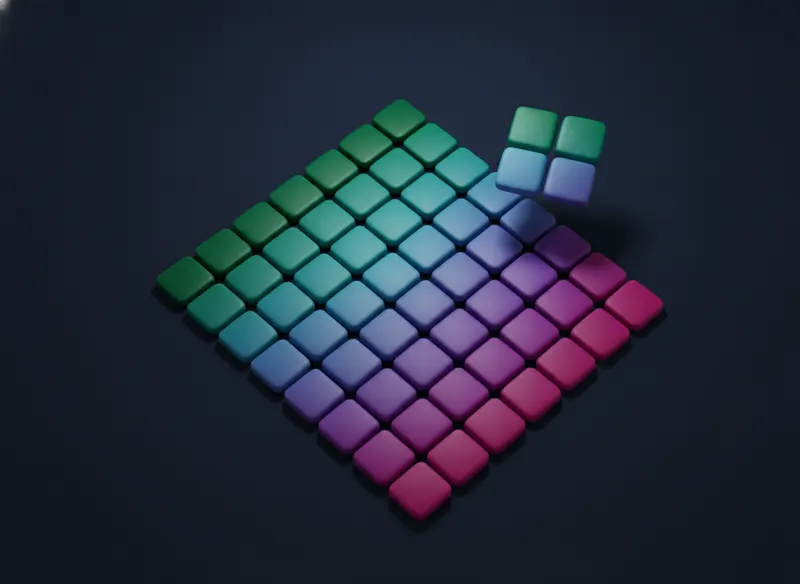
The main daily board. Swap tiles until the whole grid forms one smooth gradient.
Huedle Bars
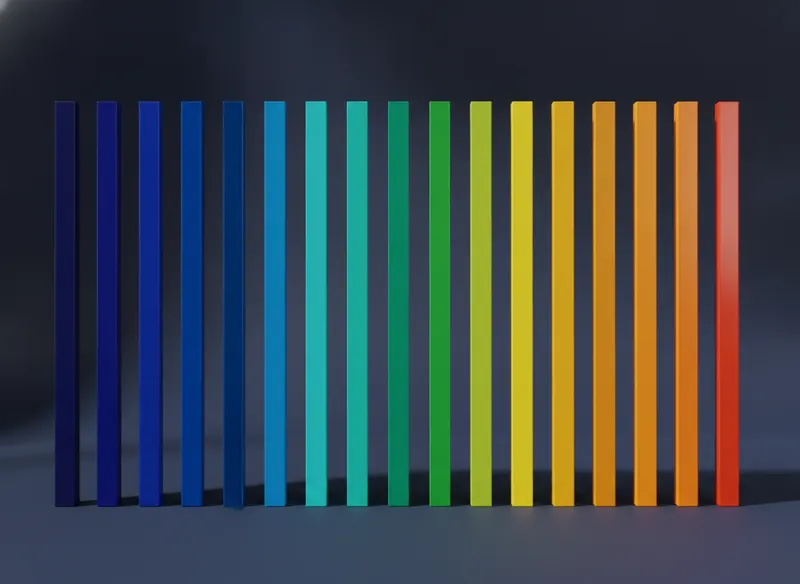
A single gradient strip cut into vertical bars. Slide them back into order, three strips a day.
Hex Huedle
See a color, then guess its six-digit hex code. Each digit tells you higher or lower.
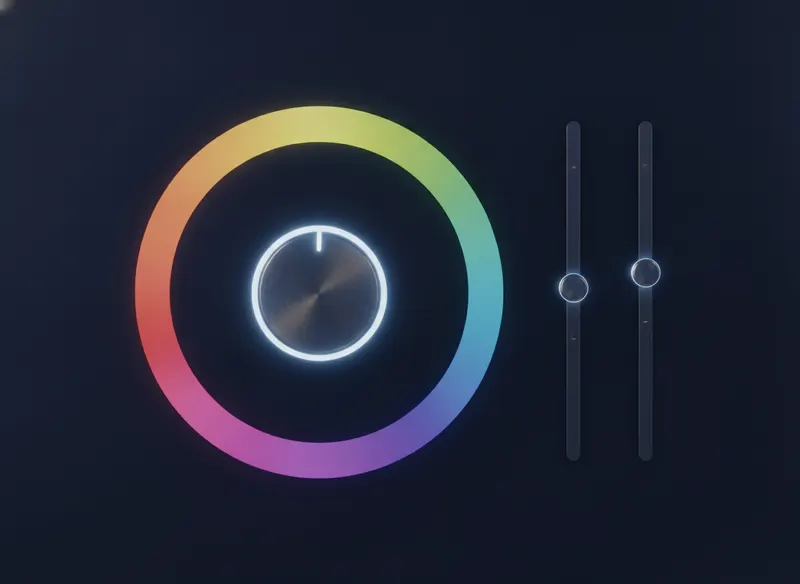
Hue Dial
Dial in hue, saturation and lightness to match the target. Arrows point the way.
What makes this Huedle board different
- A real par. Every Huedle board shows the exact minimum swaps before you start, so a Perfect means something.
- Fair colors. Boards are blended in OKLab and rejected if any two tiles are perceptually too close.
- A weekly rhythm. Huedle board size and anchors change by weekday, from a relaxed 5×5 on Monday to an 8×8 on Sunday.
- Every mode in one place. Huedle Tiles, Huedle Bars, Hex Huedle and Hue Dial each have their own daily puzzle, streak and archive.
- Unlimited play. Pick any board size from 4×4 to 10×12 and share a seed link so a friend can race you on the same board.
- Accessible. Full keyboard controls, a reduce-motion switch and a Colour assist mode for players with color-vision deficiency.
- Private by design. No sign-up. Progress and streaks stay in your browser.
Huedle FAQ
What is Huedle?
Huedle is a daily color puzzle. A smooth color gradient is cut into square tiles and scrambled, and you swap the tiles until the gradient is whole again. Everyone gets the same board on the same date, and a new one appears at midnight in your time zone.
Is Huedle free to play?
Yes. Every mode on Huedle Game is free and runs in your browser on phones, tablets and computers. There is nothing to download and no account to create.
How is the par number worked out?
Par is the fewest swaps that can possibly solve the Huedle board. The scrambled board splits into cycles of tiles that are sitting in each other’s places; a cycle of k tiles needs k − 1 swaps, so par equals movable tiles minus cycles. Matching par earns a Perfect rating.
Why does the Huedle board size change during the week?
Difficulty climbs through the week. Monday starts with a 5×5 board and extra locked anchor tiles, Thursday drops to corner anchors only, and Sunday is a full 8×8 board with 60 tiles to place.
What do the dots on some tiles mean?
A dark dot with a white ring marks a locked anchor tile. Anchors never move, so they show you exactly which colors belong at the corners (and, on easier days, at the middle of each edge).
Can I play old Huedle puzzles?
Yes. The Huedle archive lists every daily Huedle board since puzzle #1 on November 1, 2026, for all four modes, and marks the ones you have already solved in this browser.
I find some colors hard to tell apart. Can I still play?
Turn on Colour assist in the settings (the sliders icon). Each tile then shows the number of the cell it belongs in, so the puzzle can be solved by position as well as by hue. Solves made with assist are labelled Assisted.
Where are my streaks and statistics saved?
Only in your own browser’s local storage, never on a Huedle server. Nothing is sent to a server, which also means clearing your browser data or switching devices starts your statistics fresh.
Is this the same game as huedle.uk?
No. Several different color games share the name Huedle. Huedle Game (huedlegame.org) is an independent site with its own boards, scoring and modes. Our versions guide explains how they differ.